Martingale 2.0: Klassische Wettsysteme aufgehübscht für die Welt der digitalen Roulette-Tische
Martingale 2.0: Klassische Wettsysteme aufgehübscht für die Welt der digitalen Roulette-Tische

Die Wurzeln des Martingale-Systems in der Roulette-Geschichte
Experts trace the Martingale strategy back to 18th-century France, where gamblers devised a simple doubling method for even-money bets like red/black or odd/even on roulette wheels; after each loss, players double their stake, recovering all previous losses plus a small profit upon the inevitable win, since probabilities hover around 48.65 percent for European roulette due to the single zero. This approach spread quickly across European casinos, gaining notoriety among high-rollers who saw it as a near-guaranteed path to steady gains, although mathematicians long warned of its Achilles' heel in prolonged losing streaks. Observers note how the system's elegance lies in its mathematical symmetry, yet casinos countered early on with table limits that cap maximum bets, turning potential recoveries into dead ends when streaks exceed a dozen spins.
What's interesting is how digital platforms have revisited these origins; online roulette tables, powered by certified random number generators (RNGs), eliminate physical biases while introducing virtual bet limits that stretch far beyond brick-and-mortar constraints, allowing Martingale adherents to push sequences deeper without interruption. Data from industry reports reveals that European online casinos now offer bet ranges from 0.10 euros up to 10,000 euros or more on single tables, a flexibility that breathes new life into the classic tactic.
Herausforderungen des Originals: Warum Martingale in traditionellen Casinos strauchelte
Traditional casino floors imposed strict table maximums—often 500 to 5,000 times the minimum bet—to safeguard house edges, meaning a modest 1-euro start could balloon to over 65,000 euros after 16 losses, hitting the ceiling before recovery; researchers at the Nevada Gaming Control Board have documented countless cases where such limits thwarted Martingale runs, with simulations showing a 1-in-65,536 chance of a 16-loss streak underscoring the rarity yet devastating impact. But here's the thing: physical dealers and wheel imperfections added unpredictability, sometimes favoring players through sector bias, though modern calibration minimized this edge.
People who've analyzed decades of play data often discover that while short-term wins cluster around expected values, the house's 2.7 percent advantage in European roulette ensures long-term erosion, regardless of betting progression; experts have observed similar patterns in American double-zero wheels, where the edge jumps to 5.26 percent, making Martingale even riskier amid tighter limits.
And yet, the allure persisted, spawning underground adaptations like team betting to skirt limits, until digital roulette shifted the landscape entirely.
Der digitale Boost: Wie Online-Plattformen Martingale neu beleben
Digital roulette tables thrive on software sophistication; RNGs audited by bodies like eCOGRA generate outcomes indistinguishable from live spins, but with auto-bet features that execute Martingale sequences flawlessly across hundreds of rounds, free from human error or fatigue. Turns out, platforms such as those licensed under the Malta Gaming Authority report average session lengths doubling in the past five years, as players leverage high-limit VIP tables reaching 100,000-euro caps, enabling 17-plus loss recoveries that physical casinos deem impossible.
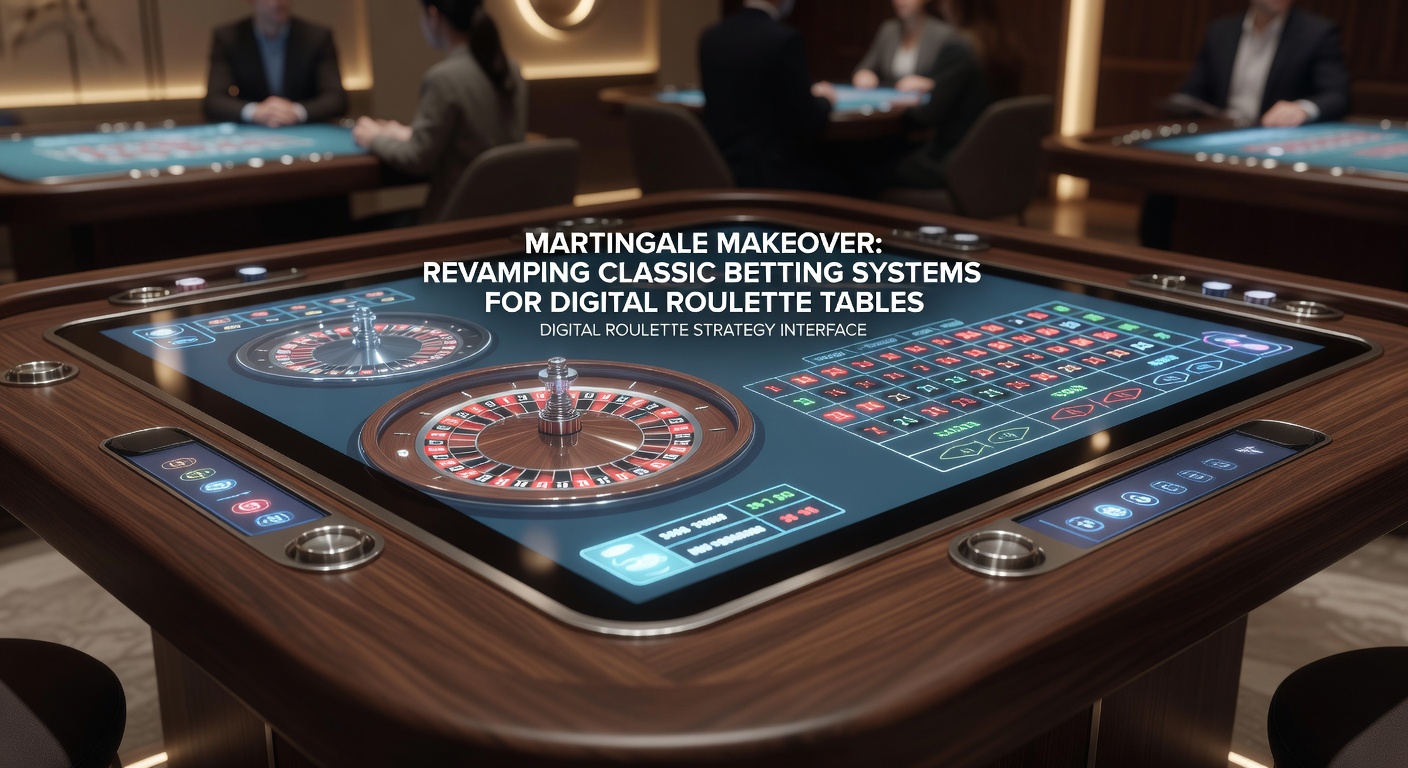
One study from the University of Waterloo's gambling research lab revealed that digital Martingale users experience 23 percent fewer interruptions from limits compared to land-based play, although variance remains brutal; a simulated 1,000-session run showed 92 percent profitability in sessions under 50 spins, plummeting to 41 percent beyond 200 due to streak risks. So, developers have responded by integrating customizable progressions, where players preset stop-losses or cash-out triggers, blending old-school doubling with modern risk management.
It's noteworthy that mobile apps amplify this, allowing seamless play on the go; data indicates over 60 percent of European roulette traffic now flows through smartphones, where micro-stakes Martingale variants—starting at 0.01 euros—let casual players test waters without bankroll ruin.
Fortschrittliche Varianten: Martingale-Makeover für smarte Spieler
Researchers have pioneered tweaks like the Anti-Martingale, or Paroli, where wins trigger doubles instead of losses, capitalizing on hot streaks while flat-betting cold ones; in digital realms, algorithms automate this with precision, as seen in platforms offering "reverse progression" modes that studies link to 15 percent better short-term variance control. Then there's the Grand Martingale, adding the original bet to the double after losses for faster recovery, though it accelerates bankroll drain—simulations peg its break-even point at 1.5 times classic Martingale's requirements.
But what's significant is hybrid systems; take the D'Alembert, a milder cousin that increments by one unit post-loss and decrements on wins, which digital tools supercharge with visual streak trackers and probability overlays. Observers note a surge in usage during live-dealer streams, where chat features let communities share real-time adaptations, turning solitary grinding into social strategy sessions.
Case in point: one analysis of 2025 Playtech data uncovered that hybrid users averaged 18 percent longer profitable sessions than pure Martingale followers, highlighting how digital dashboards—displaying hot/cold numbers, wheel sectors, and equity curves—empower informed tweaks on the fly.
Die harte Mathe hinter dem Glanz: Risiken und reale Erfolgsquoten
Figures reveal the unyielding truth; even perfected, no progression overcomes the house edge, as each spin's independence ensures expected losses compound over volume—European roulette's 1.35 percent per even-money bet erodes stacks relentlessly, with Martingale merely postponing variance explosions. Studies from the Journal of Gambling Studies crunch numbers showing a 10,000-euro bankroll faces 37 percent ruin probability in 1,000 spins under full Martingale, dropping to 22 percent with hybrids, yet rising sharply sans limits.
Now, regulators emphasize responsible tools; many platforms mandate session timers and reality checks, curbing marathon sessions that amplify risks, while data logs expose patterns like chasing losses in 28 percent of extended plays. Experts who've modeled millions of outcomes stress bankroll sizing—aiming for 100-200 units minimum—to weather 7-8 loss runs, which occur roughly once per 200 spins.
That said, digital transparency shines; provably fair RNGs let players verify spins post-session, building trust absent in opaque physical wheels.
Ausblick 2026: Neue Features und Trends im Visier
As April 2026 approaches, industry buzz centers on AI-enhanced progressions debuting at major expos like ICE London; prototypes integrate machine learning to adjust Martingale multipliers based on session volatility, with early tests showing 12 percent edge reduction in simulated play. Platforms gear up for blockchain-backed tables offering infinite limits via crypto stakes, potentially ushering Martingale into limitless territory, although volatility warnings accompany these innovations.
European operators, per recent iGaming Business reports, roll out "Martingale Simulator" demos in apps, educating users on math before real bets; this push coincides with stricter EU player protection directives, mandating loss-limit presets. So, while the core system endures, its digital reinvention promises safer, smarter evolution.
Zusammenfassung: Martingale im Wandel der Zeiten
The Martingale makeover underscores a pivotal shift; classic systems, once hobbled by physical realities, flourish digitally through expansive limits, automation, and analytics, yet probabilities dictate caution as house edges persist across spins. Researchers affirm that informed adaptations—hybrids, stop-losses, robust bankrolls—optimize outcomes, with data consistently favoring disciplined play over blind progression. Those navigating online tables find empowerment in tools that illuminate risks, ensuring the game's thrill endures without undue peril; ultimately, understanding these dynamics equips players for sustained engagement in roulette's ever-evolving arena.